Jenjang dan burung perancah (Cranes & Waders)
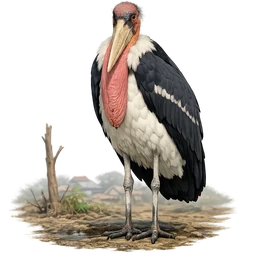
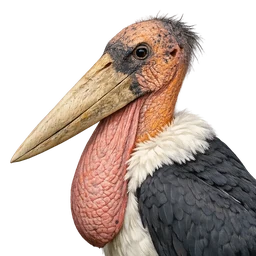
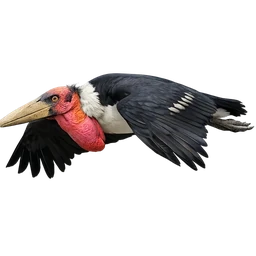
Greater Adjutant
Leptoptilos dubius
- mistis
- 80 km/h
- Hampir terancam
Once cursed as a bad omen and chased from village trees, until the women of Dadara in Assam pulled on green gamosas, called themselves the Hargila Army, and turned the giant stork into their town's pride. The mascot is winning.
- Populasi
- 1,360–1,510 mature individuals globally (increasing trend)
- Habitat
- Freshwater wetlands, shallow lakes, drying lake beds, seasonally flooded marshes and grasslands, riverine plains, and garbage dumps; breeds colonially in tall trees during the dry season, elevation typically 0–500 m
- Fakta menarik
- Unusually for a stork, the Greater Adjutant retracts its neck in flight the way herons do, and in Assamese it is called "hargila" — literally "bone-swallower" — reflecting its scavenging habits.
- Sebaran
- Historically widespread across South and Southeast Asia; range has catastrophically contracted since the 19th century and it is now restricted to two isolated subpopulations — northeastern India (Assam, Bihar/Bhagalpur) and Cambodia (Prek Toal, Tonle Sap) — probably extinct in Bangladesh, Laos, Myanmar, Nepal, Pakistan, Thailand, and Vietnam
- Makanan
- Omnivorous scavenger; feeds mainly on carrion and offal (including at garbage dumps) but also opportunistically takes fish (36+ species documented in Assam), frogs, large insects, birds, reptiles, and rodents
- Ukuran
- 1,45 m
- Bentang sayap
- 2,5 m
- Masa hidup
- 13 tahun