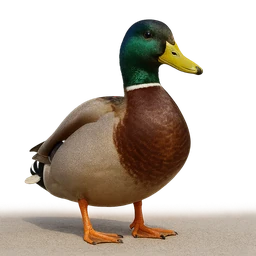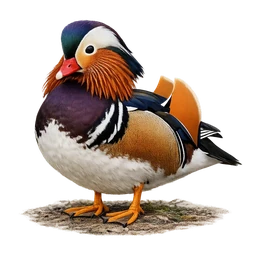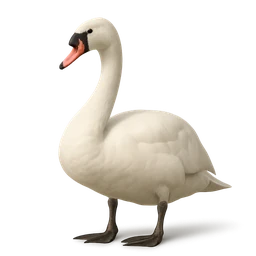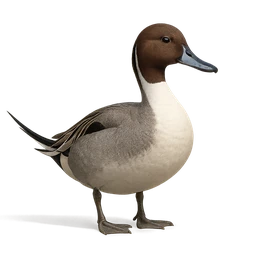
Unggas air (Waterfowl)
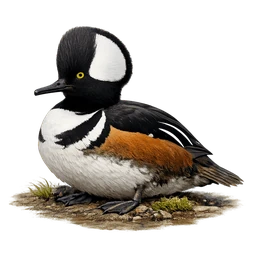
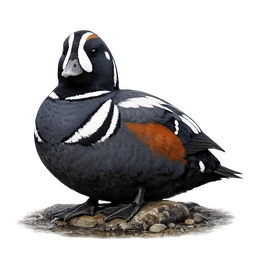
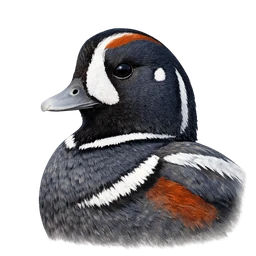
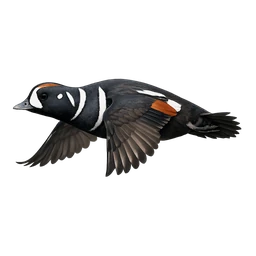
Harlequin Duck
Histrionicus histrionicus
- tidak umum
- 72 km/h
- Risiko rendah
Painted in dramatic blue, white, and chestnut. Lives in whitewater rivers most ducks would never touch.
- Populasi
- Roughly 150,000–250,000 total, dominated by the Pacific/western North American population (~100,000 winter in the Aleutians alone); the disjunct Atlantic/eastern population is far smaller, only about 1,800–2,000 wintering birds. There is no comprehensive global population estimate because of survey difficulty in the species' remote habitat, so this is a regional composite rather than an authoritative global count.
- Habitat
- Fast-flowing, whitewater rivers and mountain streams (often with small islands/sandbars) during the spring/summer breeding season; rocky, surf-battered coastlines and intertidal zones in winter
- Fakta menarik
- Harlequin Ducks sustain more bone fractures than any other waterfowl species, and most adults carry multiple old, healed breaks from a lifetime spent in pounding surf and whitewater rapids (the oldest banded individual on record lived at least 20 years, 9 months).
- Sebaran
- Breeds in disjunct populations in northwestern North America (Alaska, western Canada, Pacific Northwest), northeastern North America (Labrador/maritime eastern Canada), plus Greenland, Iceland, and far-eastern Russia; winters along the Pacific coast from the Aleutians to northern California and along the Atlantic coast from Greenland/Labrador south to the Chesapeake Bay area (Maine holds over half the eastern wintering population)
- Makanan
- Aquatic invertebrates: on breeding rivers mainly aquatic insect larvae (e.g., midges) and fish eggs; in winter mainly marine invertebrates such as crabs, amphipods, mussels, limpets, periwinkles, snails, and barnacles
- Ukuran
- 0,42 m
- Bentang sayap
- 0,66 m
- Masa hidup
- 10 tahun