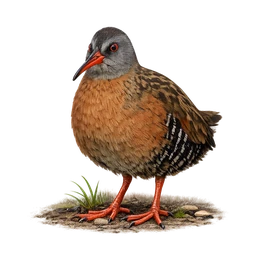
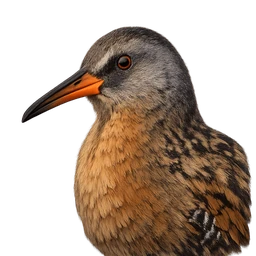
Profile
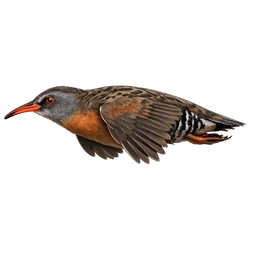
In flight
Cranes & Waders
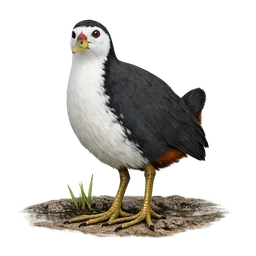
Virginia Rail
Rallus limicola
- uncommon
- 42 km/h
- Least Concern
Built sideways for squeezing through cattails. Forehead feathers are reinforced for pushing through dense reeds.
- Population
- ~240,000 mature individuals (stable)
- Habitat
- Shallow freshwater and brackish inland marshes, bogs, fens, and swamps with dense stands of cattails and rushes (typically 40-70% emergent vegetation coverage mixed with open water/mudflats), standing water usually under 6 inches deep with a muddy bottom; occurs from sea level to ~3,660 m elevation; occasionally uses salt marshes in winter
- Fun fact
- The Virginia Rail has an unusually high ratio of leg muscle to flight muscle for a bird (roughly 25% vs 15% of body weight), reflecting its preference for running/skulking through dense marsh vegetation over flying to escape danger.
- Range
- Breeds across southern Canada (Nova Scotia to southern British Columbia) south through the northern and western United States to California and North Carolina; winters from the southern/coastal US south through Mexico, Central America, and the Caribbean to northern South America (Colombia, Ecuador, Peru); vagrants recorded in Bermuda and Greenland
- Diet
- Primarily aquatic invertebrates — beetles, flies, dragonflies, crayfish, snails, slugs, spiders, and earthworms — plus small fish, frogs, and occasionally small snakes; supplements with seeds and plant material in fall/winter
- Size
- 0.235 m
- Wingspan
- 0.35 m
- Lifespan
- 5 years